Define what matters
Configure watchlists around the terms, entities, topics, and subjects relevant to your operational requirements.
Blura SAGA for Public Safety
BLURA SAGA is an AI-powered digital intelligence platform built for public-safety and law-enforcement teams. It helps teams identify relevant digital signals, understand their context, connect related activity, and turn findings into actionable intelligence for faster, informed response.

Built for public safety
A post, an account, and a circulating video may be part of the same developing issue. BLURA SAGA brings relevant digital signals together, connects their context, and helps intelligence teams and investigating officers understand what is happening, why it matters, and what to do next.
How Blura SAGA turns signals into intelligenceConfigure watchlists around the terms, entities, topics, and subjects relevant to your operational requirements.
Analyze matched content, related accounts, narratives, locations, events, and available media to uncover the broader context.
Connect findings to investigations, cases, assigned officers, or departmental actions for structured follow-up and accountability.
Collection and analysis are configured around the public sources, languages, subjects, and intelligence requirements relevant to your deployment.
Monitoring & alerting
Watchlists bring relevant public signals into focus with the matched term and the context around them. Intelligent alerts help teams prioritize what matters, identify emerging risks, and determine who needs to act.
Monitor relevant terms across English, Telugu, Hindi, Urdu, and other languages, including native scripts, transliteration, and mixed-script content.
Capture the matched term, original content, account, timestamp, and related context together so investigators can understand why a signal was flagged.
Prioritize alerts based on relevance and risk, and route them to the appropriate team or officer with acknowledgement and escalation tracked through the workflow.
An alert identifies material for review. The officer assesses the context and decides whether action is needed.
Native script · Transliteration · Mixed script
The original source stays connected.
Digital investigation
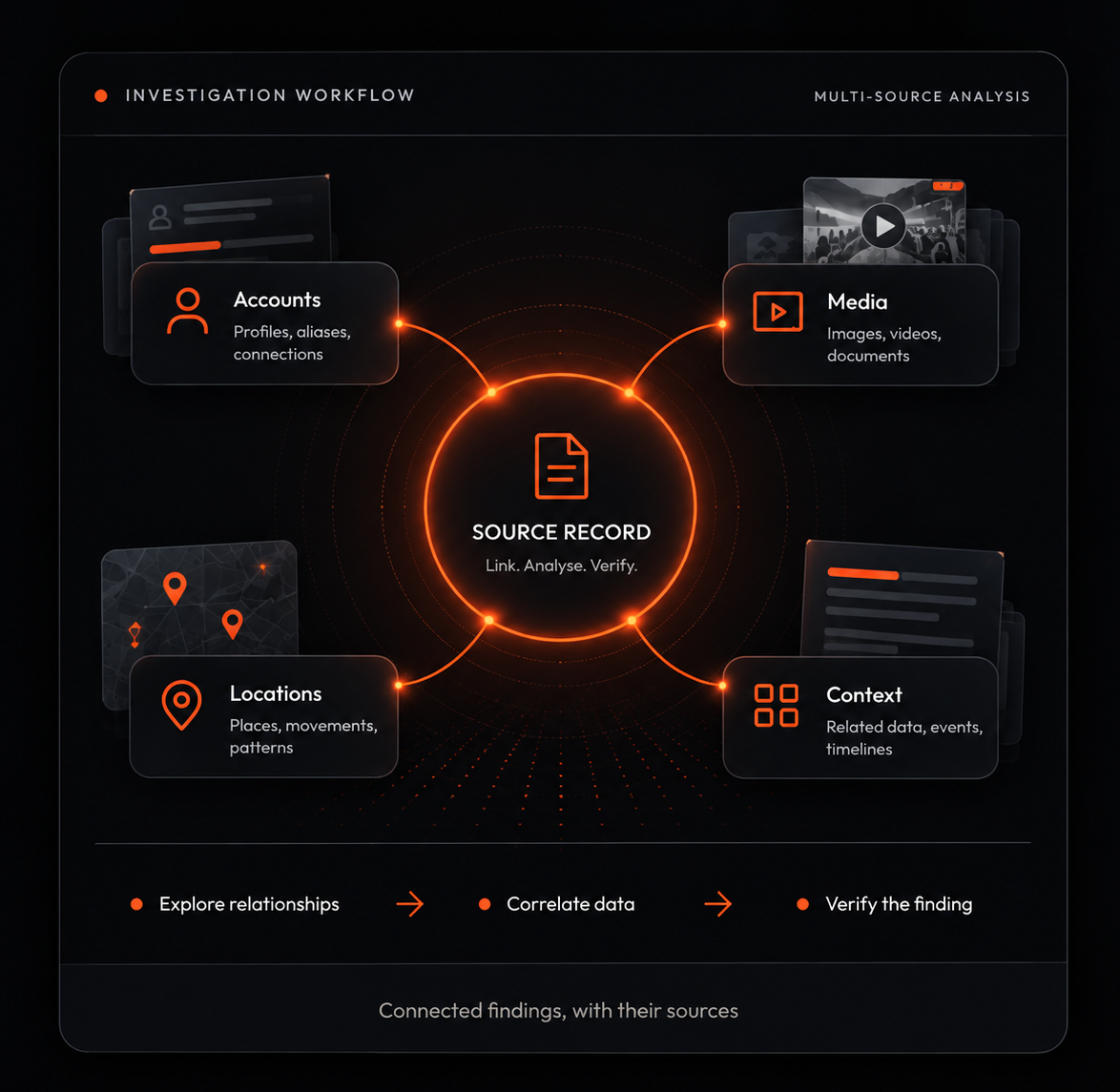
Start with an account or a piece of media. Blura SAGA helps investigators explore related information and preserve the findings with the material that produced them.
Explore username matches, known aliases and related accounts across available sources. A matching handle is a candidate to investigate, not proof that two accounts belong to one person.
Extract available GPS coordinates, capture time and device information from the original file. When metadata is missing, the tool reports its absence rather than estimating a location.
Review Real, Fake, Suspicious or Needs Review outcomes with confidence and frame-level analysis. A Needs Review result calls for a person to examine the material.
Case & grievance management
A useful finding needs a place in the wider case. Blura SAGA connects digital material to investigative records while keeping departmental complaints in a traceable response workflow.
From a source finding to the wider case.
Bring known accounts, aliases, captured media and observed locations into one record. Link the record to an FIR number so the digital trail and registered case reference each other.
Keep the original file and capture metadata beside the values extracted from it. Investigators can return to the source when they assess a finding.
Categorise public complaints, route them to the responsible department and track New, In Progress and Resolved states, including time in each state and who closed the item.
From detection to decision
The platform provides context and a record of activity. Officers retain responsibility for verification, investigation and the response.
A configured watchlist term matches public content.
An officer checks the source, priority and surrounding context.
The geography or subject determines responsibility.
Related accounts, media and findings join the case.
The action taken and its supporting material stay together.
In practice
Illustrative situations showing how teams can use the information. These are not customer case studies.
A watchlist term appears in a mixed-script public post. The officer can review what was said, understand its context and assess why the signal matters.
Open the matched term, captured post and account context; examine related signals before assigning further work.
A review grounded in the source material.
A circulating clip appears to show an inflammatory statement. Its authenticity is uncertain and requires examination before conclusions are drawn.
Examine media-analysis results and frame-level findings, then route uncertain material for human review.
An informed assessment before a public response.
An image is being shared with a claim about an incident. The original file is available for examination against the context in which it is being circulated.
Check available location and capture-time metadata against the claim, preserving the original file beside the extracted values.
A documented basis for further verification.
Built for public safety
An investigation needs clear ownership, defined access and traceable source material. SAGA aligns the workflow with your team’s responsibilities, operating boundaries and departmental requirements.
Access is bounded by role and the geography or subject assigned to the user.
Searches, exports and case actions carry an audit record connecting the activity to its user and time.
Review hosting, data location, retention, role permissions and source coverage for your department's operating needs.
Public Safety questions
Anything not answered here, a product specialist can take in the demonstration.
Ask a questionIt is the public-safety use of the Blura SAGA social media intelligence platform. It connects monitoring of relevant public signals, investigation tools and case workflows so law-enforcement teams can review the information behind an issue and record their actions.
Source coverage is configured for each deployment. The watchlist capability described here covers English, Telugu, Hindi and Urdu, including script and transliteration matching. Confirm the current source list and any additional language requirements in your demonstration; monitoring does not imply access to all platforms or private conversations.
The captured item retains the matched term, account and collection context. An alert is prioritised and routed by geography or subject so the responsible officer can review it. Exact tier definitions and escalation intervals need to be established for the deployment.
No. Username matching returns candidates across available sources. The investigator examines the profile details and other evidence before deciding whether accounts are connected to the same person.
No. Location, capture time and device details are available only when the file retains that metadata. Many social platforms strip image metadata. An empty result means the information is absent from the file, not that a location has been verified.
The available analysis does not support a more definite outcome. The result is deliberately referred to a person, with the confidence and frame-level findings available for examination. It is not an automatic determination of authenticity.
A person-of-interest record can carry known accounts, aliases, captured media and observed locations, and be linked to an FIR number. Original material and capture metadata stay available alongside the findings.
Visibility is scoped to the geography or subject assigned to a user. Captured material keeps its metadata, and searches, exports and case activity are recorded in the audit trail. The department's own process governs how that material is used; hosting, retention and detailed permissions must be reviewed for the deployment.
Your next step
Walk through watchlists, investigation records and response workflows configured around your team’s responsibilities and departmental requirements.